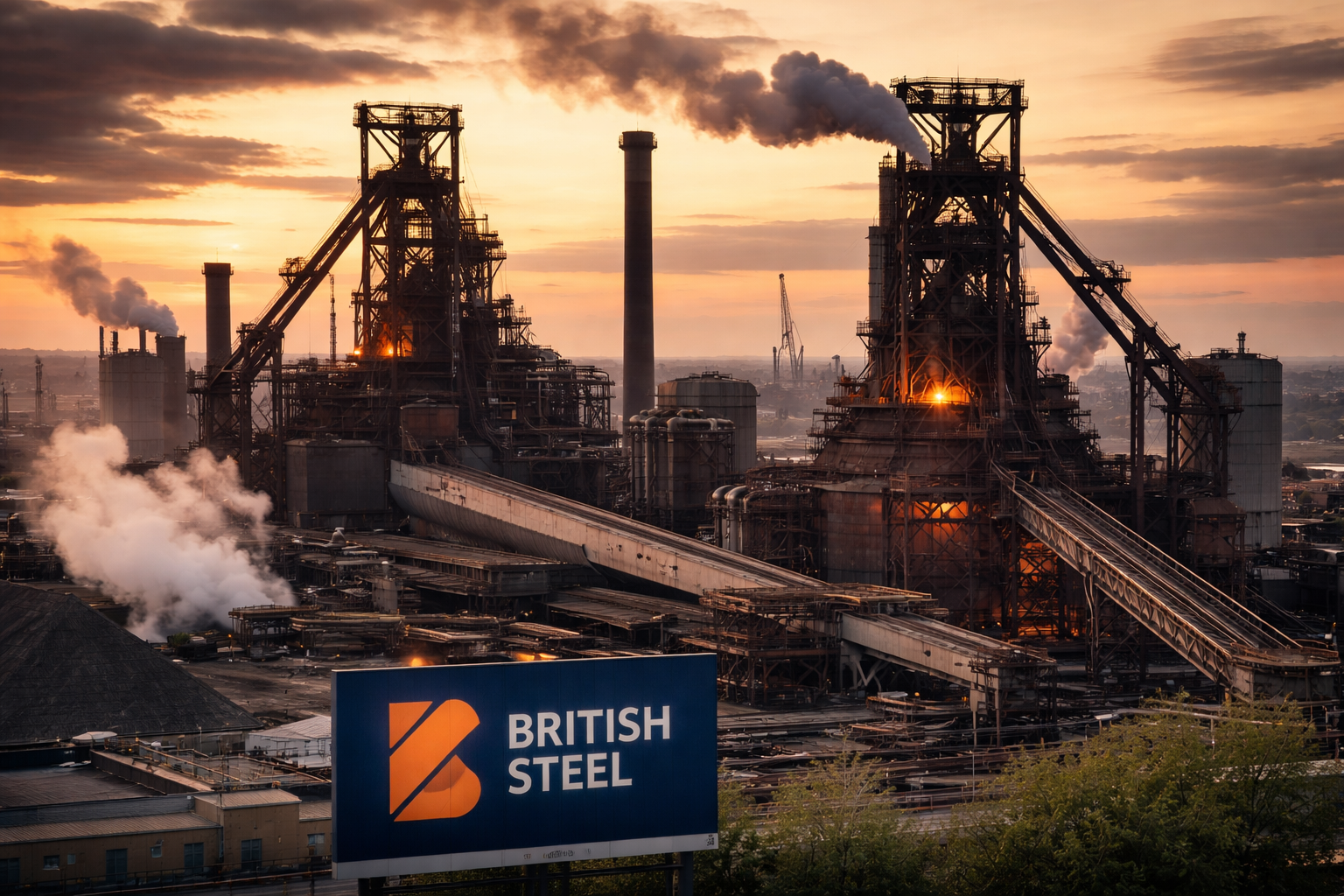

Government Plan Could Close Britain’s Last Blast Furnaces at Scunthorpe
A controversial proposal being considered by the UK government could see the closure of the nation’s last remaining blast furnaces at British Steel’s Scunthorpe site, putting thousands of jobs at risk and ending Britain’s ability to produce primary steel.
The plan under discussion would involve merging British Steel with parts of Speciality Steel UK (SSUK), a business previously owned by the GFG Alliance and now under government control following insolvency. Central to the proposal is the refurbishment of an idle electric arc furnace in Rotherham, which would be used to supply semi-finished steel to British Steel’s downstream operations.
End of Primary Steelmaking in the UK
If approved, the proposal would result in the shutdown of the blast furnaces at Scunthorpe — currently the last operating blast furnaces in the United Kingdom. This would bring an end to the UK’s ability to manufacture so-called “virgin steel” from raw iron ore.
Industry figures have warned that this would leave the UK as the only G7 nation without domestic blast furnace capability, raising concerns over industrial resilience, infrastructure supply chains, and national security.
Cost Pressures and Taxpayer Support
Supporters of the plan argue that the blast furnaces are increasingly uneconomic to operate and are reportedly costing the taxpayer more than £1 million per day. Switching to electric arc furnace production, which relies on recycled scrap steel, is seen by some as a way to reduce ongoing losses and carbon emissions.
Available now
The Fantastic new EP by Simon Hugo Else.

However, significant investment would be required to bring the Rotherham facility back into operation, and questions remain over whether it could deliver the volume and quality of steel required for key sectors such as construction, rail, and defence.
Jobs and Regional Impact
British Steel employs around 4,000 people in the UK, with approximately 2,700 based at the Scunthorpe works. Around 2,000 roles could be directly affected if the blast furnaces were to close, with wider knock-on effects across the local economy and supply chain.
Trade unions have strongly criticised the proposal, warning that the loss of blast furnace capability would represent a major strategic failure unless accompanied by a long-term, fully funded industrial plan for UK steelmaking.
Political Intervention and Ongoing Talks
Earlier this year, emergency legislation was passed allowing the government to intervene directly to keep the Scunthorpe furnaces running after British Steel’s Chinese owner, Jingye Group, indicated it was preparing to shut them down.
Despite that intervention, the latest merger proposal has reignited concerns over the long-term future of steelmaking in the UK. Ministers say discussions are ongoing with industry leaders, unions, and potential partners to secure a sustainable future for the sector.
The outcome of these talks could determine whether Britain retains the ability to produce primary steel — or whether a historic chapter of UK industry comes to an end.