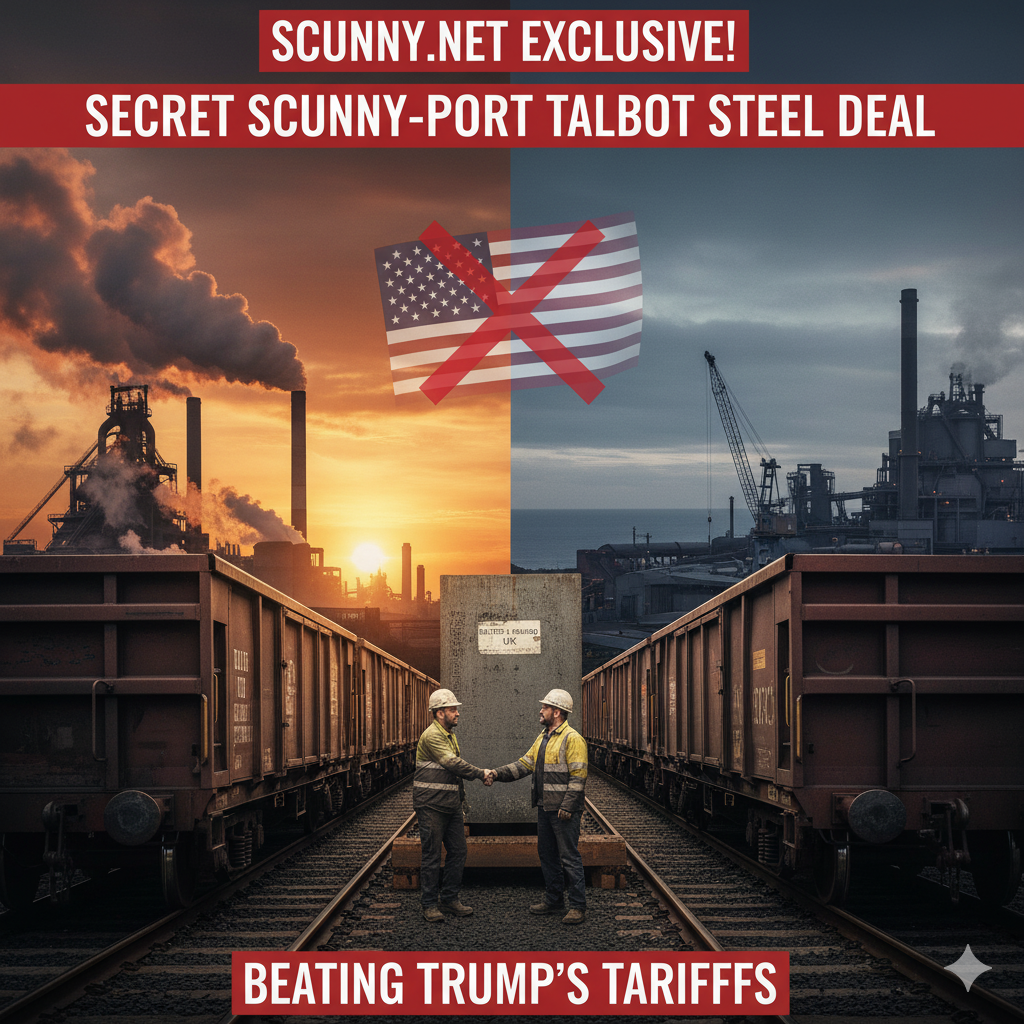

SCUNNY.NET INVESTIGATES: The extraordinary co-operation between rival giants British Steel and Tata Steel reveals the desperate measures UK industry took to fight against the threat of US trade war rules.
In an almost unbelievable twist that highlights the fragility of the UK steel industry, British Steel—currently under government control—made the highly unusual decision to sell metal slabs to its bitter rival, Tata Steel.
This was no ordinary commercial transaction. It was a secret weapon used by the Indian-owned giant, which operates the Port Talbot works, to try and bypass the most damaging new trade rule proposed by the US President.
The Problem: ‘Melted and Poured’
Following the closure of its last blast furnace in Wales last year, Tata Steel’s Welsh operations were forced to rely on importing steel slabs from other sources, including its plants in the Netherlands and India.
Available now
The Fantastic new EP by Simon Hugo Else.

But the proposed US tariff rules—pushed by the Trump administration—insisted that steel must be “melted and cast” (or “melted and poured”) in the UK to qualify for any preferential, tariff-free quotas. Imported slabs, even from another Tata plant, would have failed this test, leaving Port Talbot’s products exposed to devastating US tariffs.
The Scunthorpe Solution
Enter the Scunthorpe steelworks. As the last remaining facility in the UK capable of producing virgin steel from raw materials (the ‘melted and poured’ process), British Steel became the unlikely saviour.
According to industry sources, British Steel’s blast furnaces provided slabs to Tata’s operations in South Wales in recent months. By purchasing these slabs from Scunthorpe, Tata Steel could claim the product was “melted and poured” in Britain, allowing them to try and side-step the proposed US trade restrictions.
A Rare Act of Co-operation
The sale represents a rare moment of practical co-operation between two historically competitive giants of the UK’s industrial heartlands. For Scunthorpe, the move was also a short-term boost: selling the slabs helped the government-controlled plant increase production at a time when its Chinese owners, Jingye, had claimed it was losing \text{£}700,000 a day.
The Aftermath
The bizarre deal became necessary because the UK and US ultimately failed to agree on a zero-tariff deal for British steel, in part due to concerns from US officials about other countries using the UK as a “back door” to avoid tariffs.
While the “melted and poured” restriction was eventually dropped as the talks collapsed, UK steel exports now face a 25% tariff to the US.
The revelation of the Tata-British Steel deal shows the extraordinary lengths the steel industry was forced to go to in a desperate attempt to protect British jobs against the threat of a full-blown trade war.
Scunny.net will continue to cover the unfolding situation at the Scunthorpe steelworks as the government works to secure its long-term future.