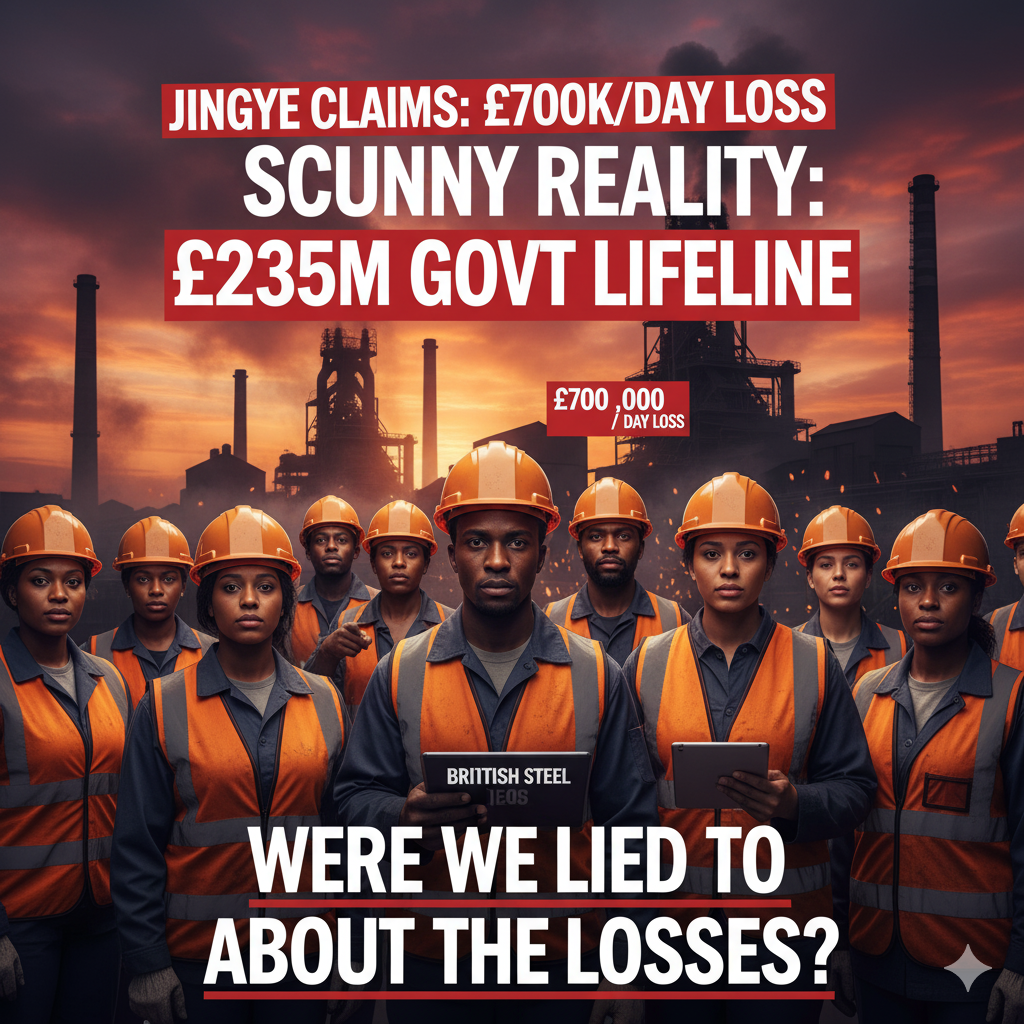

The question on everyone’s lips after the government revealed its £235 MILLION bill to keep British Steel running is a simple one: were the Chinese owners, Jingye Group, being straight with us about the true figures?
The answer, based on the information available, is a comparison of two very different numbers:
1. Jingye’s Claimed Daily Loss
Jingye repeatedly claimed the Scunthorpe operation was losing an unsustainable £700,000 a day. This figure was a key part of their rationale for announcing the closure of the blast furnaces, which would have put thousands of Scunthorpe jobs at risk. Jingye attributed this to “highly challenging market conditions,” including high energy costs and new tariffs.
2. The Government’s Actual Cost
Available now
The Fantastic new EP by Simon Hugo Else.

The £235 MILLION is the actual amount of taxpayer money the government had to spend through the Official Receiver to keep the plant operating after Jingye threatened to walk away. This money was immediate working capital to cover essential needs like raw materials, salaries, and settling unpaid bills to local suppliers.
The Key Difference: Business Loss vs. Rescue Cost
The two figures, while both massive, represent different things:
* Jingye’s Loss Figure (£700,000/day): This was a measure of the company’s daily operating loss based on current market conditions, energy costs, and the efficiency of the old blast furnace technology. It was a statement about the business’s long-term commercial viability under their ownership structure.
* Government’s Rescue Cost (£235 Million): This was the immediate, emergency cost to prevent the plant from shutting down entirely in the short term, thereby preserving the infrastructure and the workforce while a more permanent solution could be found.
While the government did not label Jingye’s claim of a daily loss a lie, key political figures did question the owners’ actions and motivations. The Business Secretary accused Jingye of not negotiating “in good faith,” especially when they reportedly rejected a government offer that would have seen ministers buy raw materials to keep the plant open at no loss to the company.
Furthermore, Jingye had reportedly been seeking a government package of £1 billion or more—significantly higher than the £500 million aid package they ultimately rejected, suggesting a massive gap between the company’s demands and the government’s willingness to invest.
Ultimately, the enormous £235 MILLION expenditure proves one thing: the crisis was real, and the cost of preventing a complete shutdown was immediate and huge. It was the price paid to stop Jingye’s loss-making from becoming Scunthorpe’s disaster.